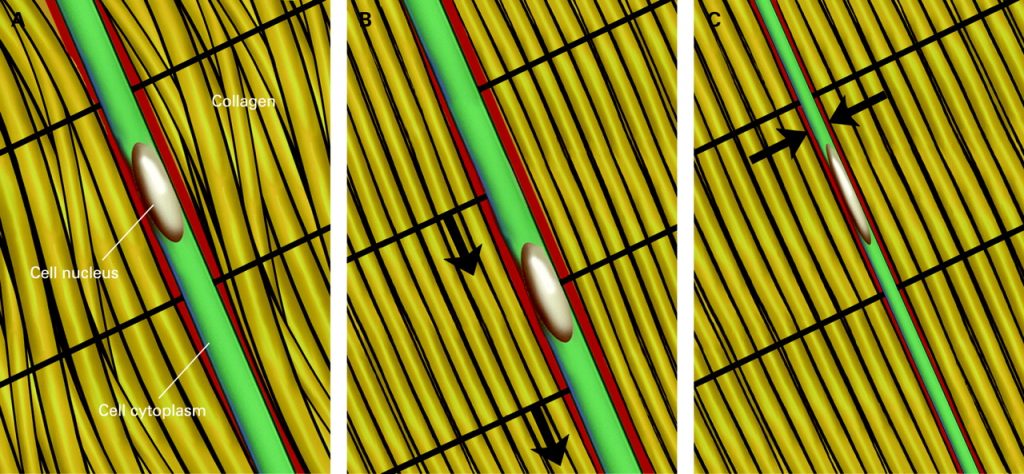
In this great BJSM podcast with Professor Karim Khan, he explains that all exercise-based rehabilitation relies on the cells of the injured tissue sensing the exercise stimulus, converting that signal to protein synthesis, and repairing tissue. He explains why ‘rest doesn’t work’ and argues that mechanotherapy has substantial evidence in its favour. The process applies to all body tissues – to injuries / pathology in bone, muscle, tendon and cartilage.
Additionally here is a great paper, open access, led by Professor Khan on the potential for exercise to facilitate tissue healing:
Key points summarised:
- the process that helps tissue repair
- cellular process in strength exercise prescriptionMechanotherapy and mechanotransduction
- Cellular anatomy
- Cells respond to loading
- Membrane sends signal into inside the cell
- ‘Light swtich’ Signal from outside of the cell to inside
- Apply to cells across the body
- tendon repair, bone following stress fracture, muscle strain
- Mechano-coupling
- Physical loading influences the cells e.g strength exercise
- Integrins: promote signalling from outside to inside of the cell
- Sends messages via 2 pathways – Direct pathway, indirect pathway (stimulate proteins)
- Repair
- Communication between cells and adjacent cells, upregulate protein, produce new tissue and adapt the structure.
- As the tissues is loaded the body will adapt appropriately
- Other points to consider
- Pain is not a contra-indication to mechanotherapy
- Traffic light system for pain (0-5 green); monitor pain behaviour,
- Adequate rest where appropriate
- Consistant load stimulus
- Give the appropriate timelines. Eg. chronic tendonopathy 12 weeks or more
- No evidence that PRP is effective in tendonopathy